


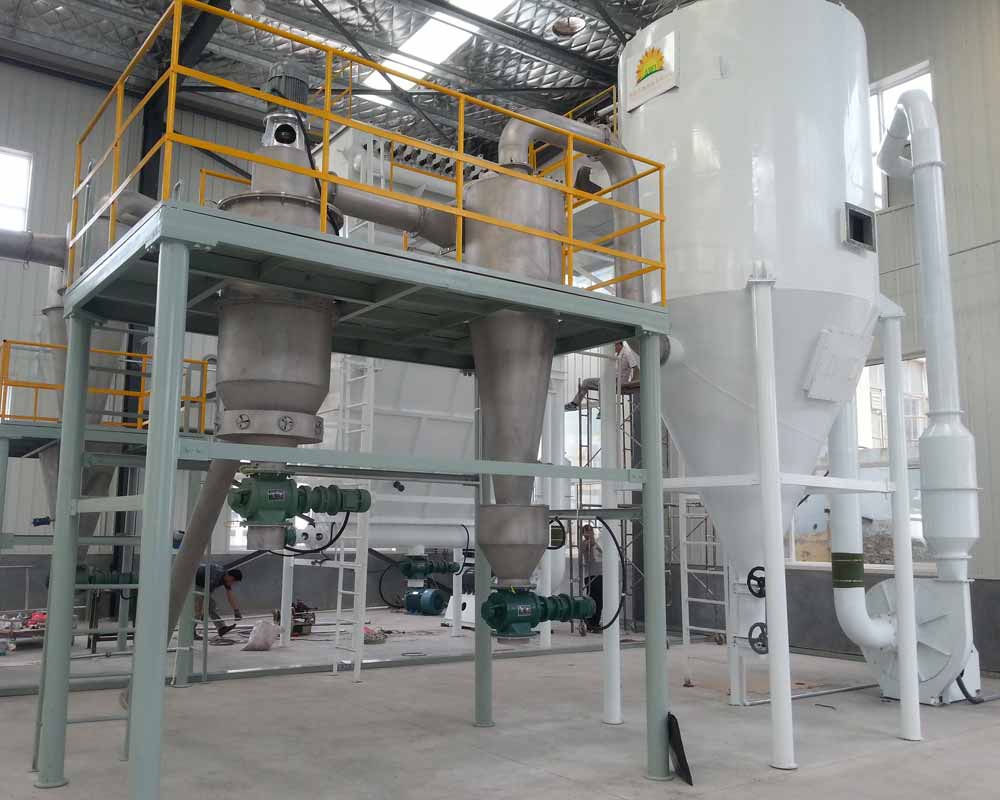
The air classifier becomes a hot-selling product inseparable from its environmental advantages
Before the introduction of the air classifier, the sorting equipment used in the industry was mainly mesh screening, such as vibrating screens. However, the mesh screening can only separate the finest powder of about 400 meshes, which cannot meet the requirements for materials with high precision requirements, and the phenomenon of material blocking and adhesion is prone to occur in the mesh screening process. The emergence of the air flow classifier perfectly solves this problem. It is mainly used to carry the animal material through the air flow. Under the strong centrifugal force generated by the high-speed rotating classification turbine, the powder mixed in the gas-solid two-phase fluid is divided according to the particle size. Separately, this classification method has the characteristics of high precision (200-8000 meshes can be adjusted freely), high efficiency, and large output. It also has the phenomenon of material blocking and adhesion due to the absence of mesh screens.
Once the airflow classifier was launched, it has been sought after by the majority of users and has been widely used in various processing fields and has become a hot-selling product.
Features of air classifier:
1. Large output, low energy consumption and high grading efficiency.
2. Concentrated particle size: The machine uses an independent vertical impeller for classification. Stable classification technology and special sealing measures effectively prevent the leakage of coarse particles, so that the product has no large particles, concentrated particle size, and high classification accuracy.
3. Reasonable structure: products with 1-6 particle sizes can be produced at the same time according to user requirements.
4. Strong applicability: It can be combined with various mills (jet mill, mechanical mill, ball mill, Raymond mill, vibration mill), etc. to form a closed-circuit or open-circuit combined operation.
5. High automation program: all impeller classifiers at all levels adopt electronic frequency conversion stepless speed regulation, and the automatic circulation type multi-box dust collection process realizes electronic control and automatic dust removal, which improves the stability of the negative pressure of the whole machine.
6. Airflow classifiers are widely used in chemicals, minerals (especially suitable for the classification of non-mineral products such as calcium carbonate, kaolin, quartz, talc, mica, etc.), metallurgy, abrasives, ceramics, refractory materials, medicine, pesticides, food, health products, new Materials and other industries.
Among the many advantages of the air classifier, the most satisfying user is its environmental protection advantage. Because of the supporting dust removal device, the air classifier can effectively avoid dust pollution during the classification process, thereby protecting the environment and reducing the operator’s burden. Diseases appearing in dust.

Applicable materials for fluidized bed jet mill
The scope of application of ultrafine pulverizers is very wide, but in today's industry, fluidized bed jet mills seem to have become people's conventional choice, but in addition to fluidized bed jet pulverizers, there are many ultrafine pulverizers. Type, such as mechanical mill, impact mill, ball mill, vibration mill, etc. So what kind of materials is the fluidized bed jet mill suitable for?
1. Non-metallic minerals
Heavy calcium, light calcium, calcium oxide, kaolin, barite, quartz, talc (white, black), wollastonite, mica (natural, synthetic), bentonite, feldspar (sodium, potassium), andalusite, hydromagnesium Stone, montmorillonite, graphite, garnet, diatomaceous earth, bauxite, petroleum coke, coal powder, magnesite, perlite, attapulgite, spinel, tourmaline, medical stone, monazite , Pyrophyllite, dolomite, rectorite, plagioclase, diopside, toolite, illite, sepiolite, andesite plagioclase, nepheline syenite, Xiuyan, cyanolite, vermiculite, mullite Stone, clay, boron glass, limestone, clay, etc.
2. Chemical materials
Alumina, aluminum hydroxide, magnesium oxide, magnesium hydroxide, zinc oxide, precipitated barium sulfate, flame retardant, cellulose, calcium phosphate, yttrium oxide, blowing agent, white carbon black, black carbon black, silica gel, strontium carbonate , Low glass powder, 4A zeolite, aluminum silicate, aluminum silicate zeolite, silicate, catalyst, polytetrafluoroethylene, polyethylene powder, PVC, PE, epoxy resin, phenolic resin, petroleum resin, carbonized resin, Polytetrafluoroethylene resin, polyethylene wax, polyvinyl alcohol, nylon, molybdenum disulfide, industrial vulcanizing agent, vulcanization accelerator, rubber vulcanizing agent, activated carbon, zinc stearate, polyether ether ketone, sodium stearate, polypropylene Amide, copper oxalate, diammonium oxalate, bisphenol A, plastic additives, rubber, rubber additives, ammonia rubber coatings, xanthan gum, sulfur, coke, foaming alkali, boric acid, titanium dioxide, dibasic tantalum phosphite , MPUT, organic anhydride, dodecanoic acid, sodium bicarbonate, isohydrogen ester, polyacrylate, methyl cellulose ether, ammonium polyphosphate, ferrite, brominated diphenyl ether, aluminum zirconium glycinate, nitric acid Guanidine, ABS, casein, cellulose, natural or man-made fibers, foam rubber, phenol resin, polycarbonate, polyester, polypropylene, polyvinyl acetate resin, stearate, styrene, Teflon, thermosetting Plastic, water and aluminum chloride, petroleum charcoal, UHMWPE, etc.
3. New materials
Nano titanium oxide, nano ceramic materials, nano tourmaline, nano diatomaceous earth, nano calcium carbonate, nano silicon dioxide, ultra-long afterglow phosphor, halo calcium phosphate phosphor, tricyanine phosphor, glass bead reflective powder, Electroluminescent powder, superfine wood powder, superfine bamboo charcoal powder, etc.
4. Battery materials
Lithium cobalt oxide, lithium manganese oxide, lithium nickel cobalt oxide, lithium nickel cobalt manganese oxide, lithium iron phosphate, manganese dioxide, lithium carbonate, cobalt oxide, ferrous oxalate, lithium hydroxide, lithium hydroxide monohydrate, graphite ( Spherical, flakes), coke powder, carbon microspheres, pitch, etc.
5. Super hard materials
Silicon carbide (black, green), boron carbide, diamond, white corundum, zircon sand, zirconia, rare earth polishing materials, tungsten carbide, silicon nitride, chromium carbide, chromium oxide, brown corundum, chromium corundum, grinding wheel material, oxide Neodymium, pure natural colored sand, etc.
6. Ceramic building materials
Ultra-fine cement, water slag, fly ash, asphalt ore, gypsum, slag, quicklime, silica fume, glass powder, etc.
7. Other materials
Fluorescent pigments, iron oxide red (green, yellow, black), chromium oxide red (green, yellow), phthalocyanine, cobalt blue, zinc oxide, lithopone, benzidine orange, toluidine red, vermilion, mica titanium pearl Pigments, acid dyes, basic dyes, neutral dyes, vegetable dyes, fluorescent whitening agents, waxes, bentonite clay, clay, electronic waste, etc.
8. Medicine and food
Traditional Chinese Medicine: Angelica, Green Tea, Salvia, Ganoderma Spores, Cordyceps, Cangqing Fruit, Panax Notoginseng, Acanthopanax Senticosus, Dictyocarpus, Ganoderma lucidum Powder, Konjac Powder, Tianqi, Ginseng, Sheep Placenta, Pine Pollen, Bee Pollen, Jia Ke Su , Pueraria lobata, Lipu taro, licorice powder, deer bone powder, ginkgo biloba, etc.
Western medicine: urotropine, ibuprofen, theophylline, cilostazol, vitamin C, black cohosh, carbamazepine, wine trough, nimodipine, turtle powder, fenofibrate, acyclovir, Albendazole, nimodipine, acol, meloxicam, fenofibrate, amoxicillin, albuterol, hydrocortisone, oxytetracycline, indomethacin, mefenamic acid, primidone , Flumequine, propaline, prednisone, propylthio, hydroxycellulose, etc.
Pesticides: herbicides, fungicides, insecticides, wettable powder, mildew and antibacterial agents, chlorothalonil, bensulfuron TC, acetamiprid, acetamiprid, carbendazim, clotrimazole, thiabendazole, etc. .
Food: food calcium, coral powder, bone meal, haematococcus, sea cucumber, dehydrated vegetables, malt, calcium/potassium citrate, carrageenan, a bean powder, coffee beans, mannitol, granular gum, sodium alginate, salt, shells , Tomato powder, coenzyme Q10, superfine mica, rose pollen, placenta, pearl powder, cocoa powder, glucose, etc.
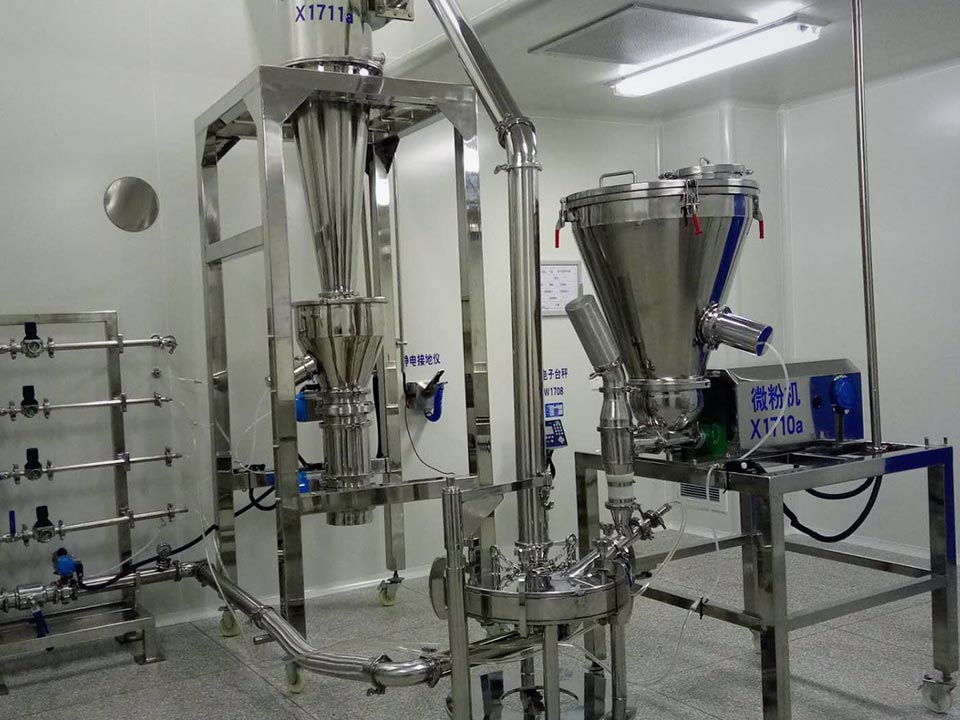
The inert gas protection jet mill can control the oxygen content
The inert gas protection airflow crushing production line adopts fully enclosed negative pressure cycle operation, adopts PLC programming control to minimize human operation and control factors. The control cabinet can be placed in a separate control room at a distance. The packaging and discharging use automatic packaging machine, and the on-site observation adopts The monitoring probe can be completely unmanned, and it can also be used in series with a multi-stage classifier to produce products with multiple granularities at a time.
1. Oxygen isolation: Before starting the equipment, replace the air in the closed circulation system with nitrogen. At the same time, the closed feeding and unloading system can replace the small amount of air brought in during the feeding and unloading process with nitrogen to maintain the oxygen in the system. The content is basically stable.
During the process, an oxygen content tester is used to continuously monitor the oxygen content in the airflow, and when it exceeds a certain level, it will immediately add nitrogen to keep the oxygen content within the safety production standard.
2. Control the concentration of gas and powder: The feeding system of the equipment is a fully enclosed, uniform speed device, which is programmed and controlled by the control cabinet. Fully enclosed plays the role of isolating oxygen, while the uniform speed controls the concentration of the materials inside the added equipment, and the feeding speed can be set arbitrarily.
If the materials added to the equipment at a constant speed accumulate inside the equipment, there is no guarantee of safety. Therefore, the shape of the equipment, such as the bending angle of the pipe; the shape of each part, etc., are scientifically calculated to eliminate the dead corners inside the equipment. At the same time, driven and washed by the high-speed airflow in the equipment, the powder will not accumulate in the pipe.
3. Discharge static electricity in time and eliminate ignition sources: The special filter material with carbon steel wire used for the pulse blowback collector can eliminate static electricity in time and ensure that the pulse dust is clean and thorough. The equipment is all metal components, all grounded, in order to release the powder static electricity as much as possible.
4. Circulating air cooling: Because the whole system is a closed circuit system, there are multiple moving parts inside the equipment, which will produce a certain temperature during high-speed movement, and the temperature is very important to the safety in processing. Therefore, the equipment is equipped with a fin-type cooler on the pipeline, which can effectively reduce the safety hazards caused by the equipment working for a long time or working in a high temperature environment.
5. Explosion-proof: The whole system is equipped with explosion-proof holes in different positions of the pipelines, and the loss is minimized when the internal pressure and concentration of the system exceed the standard caused by explosions and explosions.
The motors and other devices used in the whole system are explosion-proof motors, which have better sealing performance and effectively reduce the accumulation of dust.
6. Emergency shutdown: The emergency shutdown trigger switch of the equipment is connected to the oxygen content tester. If the oxygen content concentration monitored by the oxygen content tester does not reach the preset value within the predetermined time, the emergency shutdown is triggered, the equipment stops feeding, and the induced draft fan When shutting down, the classifier shuts down after a delay, and the nitrogen supplement system continues to work until it is manually shut down.
The inert gas shielded jet pulverizer and classifier have been widely used in scientific research institutes, metal powder processing, pharmaceutical ultrafine powder and other fields. The technology is mature, the quality is reliable, and the performance is stable. It has been widely used in processing.
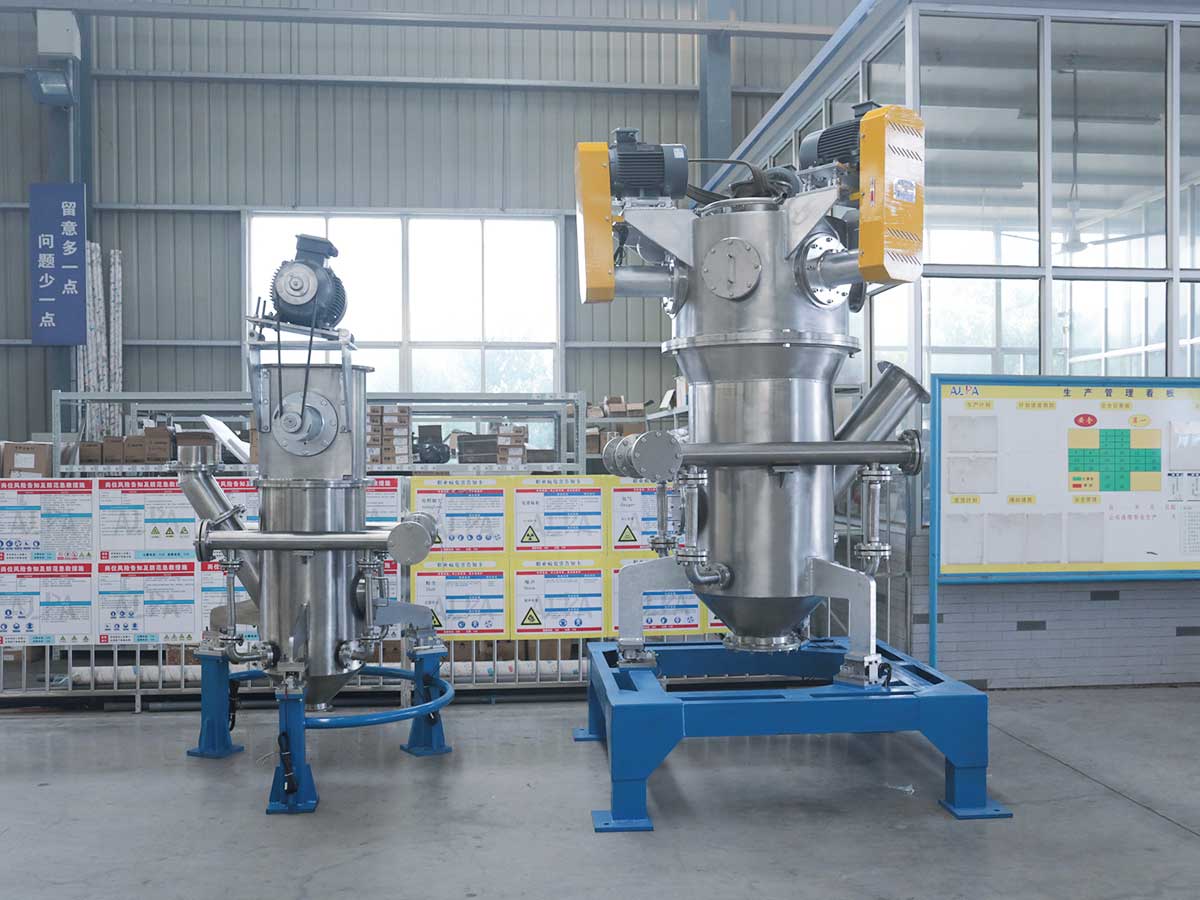
How does the jet mill do not heat up during processing?
Everyone knows that during the processing of mechanical equipment, heat is generally generated due to the friction between the equipment parts and the contact between the raw materials and the equipment, which causes the temperature to rise. For some heat-sensitive raw materials, how to control the processing time Temperature is the top priority. Especially during the crushing process, the temperature is the easiest to increase. How can the temperature be kept constant and not increase? At this time, a jet mill is needed. The jet mill is a representative product in the ultra-fine grinding equipment. It has outstanding performance in terms of processing fineness and efficiency. It is also a highlight of the jet mill that does not heat up during operation.
The kinetic energy source of the material particles in the jet mill is compressed gas. When the high-pressure gas accelerates and expands in the Laval nozzle, the pressure is converted into the kinetic energy of the material particles. When the particle size of the material is not uniform, the particle with the smaller mass will be faster, and the particle with the larger mass will be slow. Under the effect of the speed difference, the particles of different particle sizes will collide, thus making the particle size uniform; when the particle size of the material is more uniform When the high-speed jet is a typical turbulent flow, its flow state is not as uniform and stable as laminar flow, and there is violent momentum mixing in the direction of the main flow channel. Under the driving of the mixed flow, the material particles collide and rub evenly, and Obtain more uniform and refined particles.
In general, high-speed airflow expands and cools, even if a certain amount of heat is generated by friction, it will be taken away by the continuously entering airflow, so the temperature in the flow field is low, which makes airflow pulverization particularly suitable for processing heat-sensitive materials. The velocity field of the high-speed turbulence is relatively full and uniform, so the shearing effect of the airflow on the particles is also relatively uniform, and the particle size distribution of the obtained particles is narrow, and the particle shape is also ideal.
Jet mill is one of the most commonly used ultra-fine grinding equipment. It is widely used for ultra-fine grinding or fine grinding of talc, kaolin, barite, graphite, wollastonite, zircon and other non-metallic minerals and other brittle materials. The fineness of the product is generally up to 3-45μm.
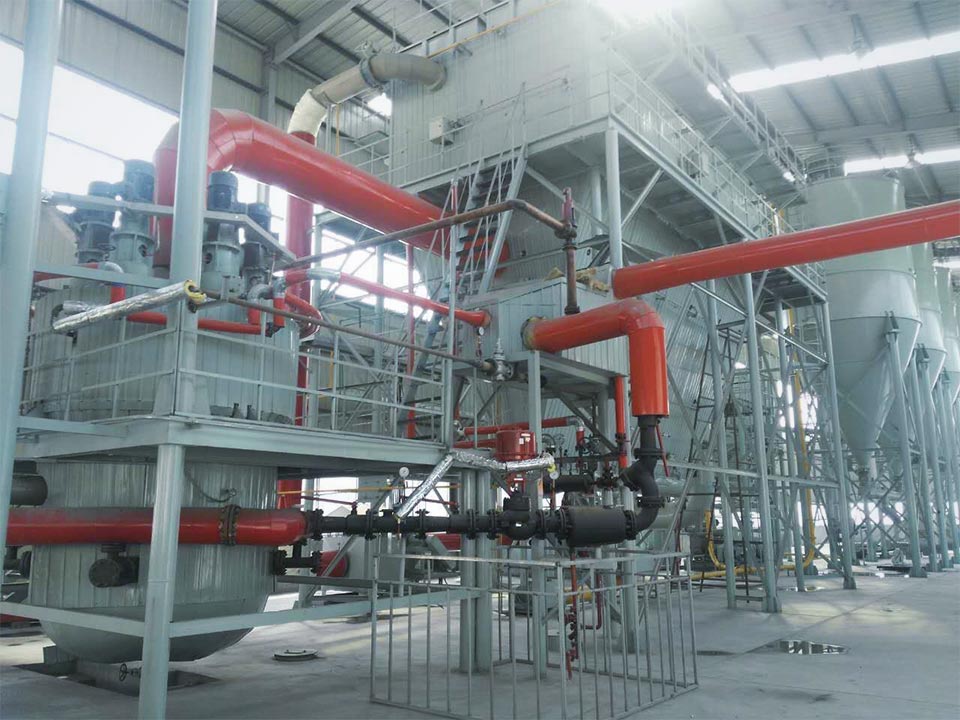
Continuous improvement of supersonic jet mill to meet higher requirements
When the compressed gas passes through the feeding ejector, the crushed raw materials enter the crushing chamber. There are multiple crushing nozzles around the crushing chamber, which spray supersonic airflow, so that the materials are impacted by the high-speed airflow and the materials collide with each other to be crushed. The grading wheel separates the particles that meet the particle size, and the coarse particles are circulated back to the pulverizing chamber to continue pulverization. After the internal closed-circuit pulverization, a uniformly distributed ultra-fine powder can be obtained at the discharge port.
1. Suitable for dry ultra-micro process. Due to the high impact speed, up to 2.5 Mach or more, particles of 1-10 microns (μm) can be easily obtained under normal circumstances, and particles smaller than 1 micron (μm) can also be obtained according to the nature of the material.
2. Since the pulverizer has a closed-circuit classification mechanism, the coarse particles in the product are continuously circulated and pulverized, so products with uniform particles and small particle size distribution can be obtained.
3. The equipment has the advantages of short crushing time, simple structure, convenient operation and maintenance, small footprint, low noise (72dB) and no vibration.
4. High crushing efficiency, continuous crushing can be carried out, and the purity of crushed products can be maintained.
5. The introduction of the latest German technology, after years of accumulated technical experience, the comprehensive performance of the equipment has been equivalent to the same model imported from Germany and Japan;
6. It is suitable for crushing, disintegrating, spheroidizing and shaping various powders with Mohs hardness below 10;
7. After crushing, the fineness of the material can be adjusted between 3~150μm, and the D50 value of some materials can reach 1.5μm;
8. Because of its special non-medium spray crushing, it is especially suitable for ultrafine crushing of high-purity materials;
9. No heat is generated during the crushing process, which has an excellent crushing effect on heat-sensitive materials;
10. Wear-resistant protection: A variety of wear-resistant protection materials can be selected for the inside of the equipment and the grading wheel, such as alumina, zirconia, and organic materials;
11. Environmental protection and automation design, the system is closed to run without dust leakage, touch screen and PLC automatic monitoring equipment can be selected;
12. Multi-purpose design: it can be used in series with air classifiers, universal pulverizers, etc., to better meet the powder particle size requirements;
13. Application fields: chemicals, minerals, traditional Chinese medicine, cosmetics, food, flame retardants, printing toners, activated carbon, resins, etc.;
The supersonic jet mill has the effect of impact shearing on the material and the impact, friction and shearing of the material and other parts to crush the material. Therefore, the average particle size of the material after airflow pulverization is fine, the particle size distribution is narrow, the particle surface is smooth, the particle shape is regular, the purity is high, the activity is high, and the dispersibility is good; it can crush low melting point and heat-sensitive materials and biologically active products (because the airflow The machine is powered by compressed air, and the adiabatic expansion of the compressed gas at the nozzle will reduce the temperature of the system). According to statistics, about 25% of international jet mills are used for ultra-fine preparation.
In recent years, the crushing equipment has been greatly improved on the basis of the previous supersonic crusher, its structure has been continuously improved, and the crushing performance has been continuously improved. In order to meet the higher requirements of the development of information technology, biotechnology and new material technology on the particle size, purity and particle size distribution of powder products, the research of ultrafine jet pulverization technology should focus on the development of the following aspects: To improve and optimize ultra-fine jet pulverization equipment, develop new equipment, and pay attention to the matching design of pulverization and classification systems.
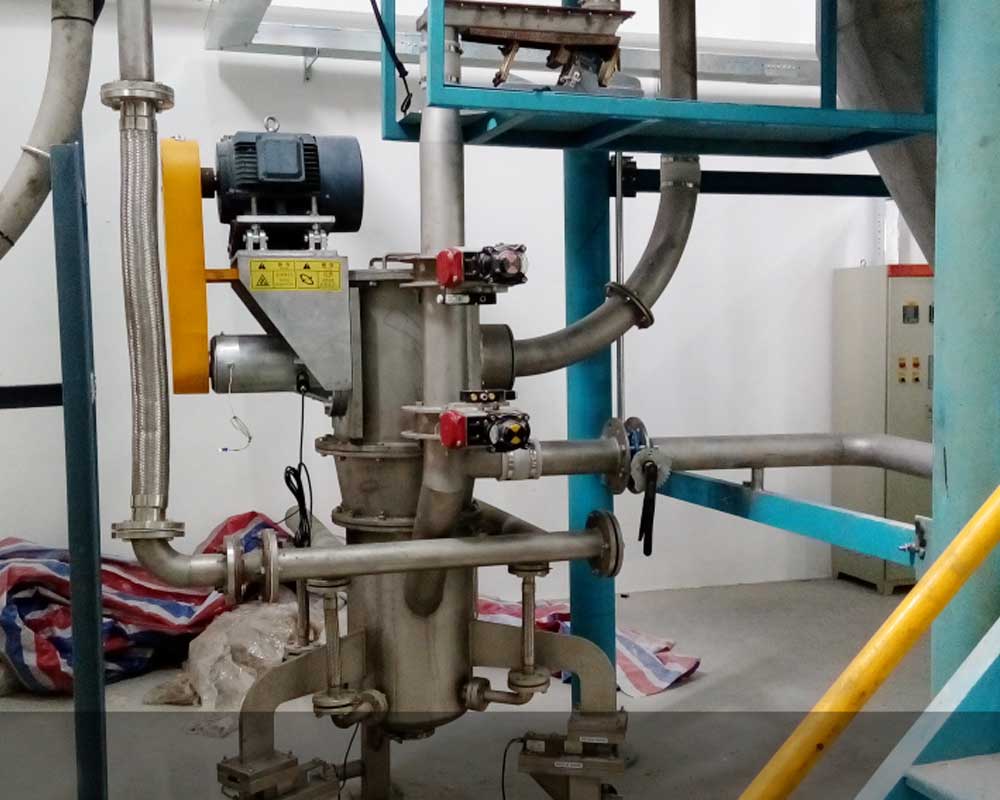
Jet mill can accurately control the particle size of ternary materials
One of the important quality indicators of ternary materials is particle size and particle size distribution. Particle size and particle size distribution will affect the specific surface area, tap density, compaction density, processing performance and point chemical properties of the ternary material. Ternary materials used in lithium-ion batteries need to strictly control the particle size and particle size distribution. In the processing of ternary materials, jet mills are usually used for pulverization.
The ternary material jet pulverizer uses high-speed airflow as the power and carrier, and the airflow bundle formed by compressed air is transformed into velocity energy through the nozzle in the pulverizing chamber. The specific performance is: after the compressed air is frozen, filtered, and dried, it forms a supersonic airflow through the nozzles and is injected into the crushing chamber to fluidize the material. The accelerated material merges at the intersection of the jet airflows of several nozzles, resulting in violent Collision, friction, shearing to achieve ultra-fine crushing of particles. The crushed material is transported to the impeller classification area by the rising airflow. Under the action of the centrifugal force of the classification wheel and the suction force of the fan, the coarse and fine powder are separated. The coarse powder returns to the crushing chamber according to its own gravity and continues to be crushed. The airflow enters the cyclone collector, the fine dust is collected by the bag filter, and the purified gas is discharged by the induced draft fan.
The ternary material jet mill is based on the design of the traditional fluidized bed mill and combined with the self-splitting classification technology, so that its performance is far superior to the traditional fluidized bed jet mill. Its main advantages are:
1. Low energy consumption, compared with the traditional fluidized bed jet mill, it can save energy by 30%.
2. Built-in self-distributing micro-powder classifier, the particle size distribution is concentrated, and there is no excessively large particles in the finished product.
3. The equipment has a compact structure and a small footprint.
4. There is no stock in the crushing box, no dead corners, easy to disassemble, wash, disinfect, easy to change varieties, and meet GMP requirements.
5. Low-temperature pulverization without medium, especially suitable for pulverization of low melting point, heat sensitive, sugar-containing and volatile materials.
6. For flammable and explosive materials, inert gas can be used as the medium to realize fully enclosed crushing. The inert gas is recycled and the loss is extremely low.
7. The crushing particle size range is wide, and the particle size of the finished product can be adjusted in the range of 3~180μm; the model is full, and the output of 5~3000kg/h is optional.
8. Negative pressure production, no dust pollution, and excellent environment.
9. High degree of automation, strong stability and easy operation.
In addition to ternary materials, jet mills can also be used in chemical, mining, abrasives, refractory materials, battery materials, metallurgy, building materials, pharmaceuticals, ceramics, food, pesticides, feed, new materials, environmental protection and other industries and various dry powders Superfine crushing, breaking and particle shaping of similar materials.
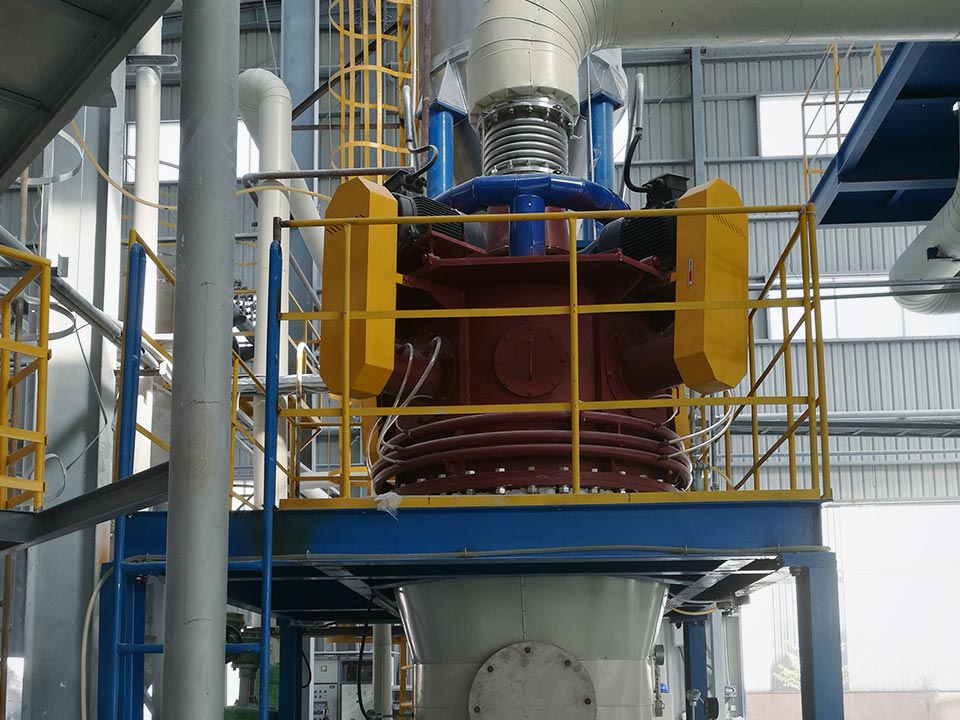
Jet mills are used in low temperature environment, food health care, abrasive refractory, etc.
Jet mill is a process where compressed air is accelerated by Laval nozzles into supersonic airflow and then injected into the crushing zone to fluidize the material (the airflow expands into a fluidized bed to suspend and boil and collide with each other), so every particle has the same state of motion .
- Low temperature applications
The jet mill can be operated under supersonic airflow, and a low temperature environment of tens of degrees below zero is formed in the crushing chamber. It can perform ultra-fine processing of heat-sensitive substances and plastic materials without cooling with liquid nitrogen. The production cost is low and the benefit is high. Typical materials are: pigments, resins, sulfur, molybdenum disulfide, insecticides, epoxy resins, polytetrafluoroethylene, rubber, ferrophosphorus.
- Food and health products
The stainless steel type (304) jet mill can be used in the ultra-fine processing of medicine, food and health care products. Its low-temperature pulverization, high-purity operation and processing, high smoothness, and easy cleaning of the machine make the stainless steel jet mill become a pharmaceutical, health care product and The ideal crushing equipment for the food industry not only improves the bioavailability and curative effect of drugs, but also reduces production costs. Typical products are: soybeans, pollen, hawthorn, sodium chloride, cordyceps, shiitake mushrooms, pearl powder, stomach medicine, nimodipine, antibiotics, ginseng, contrast medicine, ganoderma, gallnut, fleeceflower, etc.
- Abrasive refractory
Jet mill can ultra-fine processing of hard materials with Mohs hardness above seven. The application of fluidized bed pulverization and vertical turbine classifier makes the equipment wear extremely small. The rotating speed of the grading wheel can be adjusted, and the crushing parameters can be optimized. The combination of multiple classifiers can complete narrow-band classification of several particle sizes at one time. Typical products include: garnet, silicon dioxide, diamond, silicon carbide, white carbon black, emery, bauxite, boron carbide, tungsten carbide, special ceramics, etc.
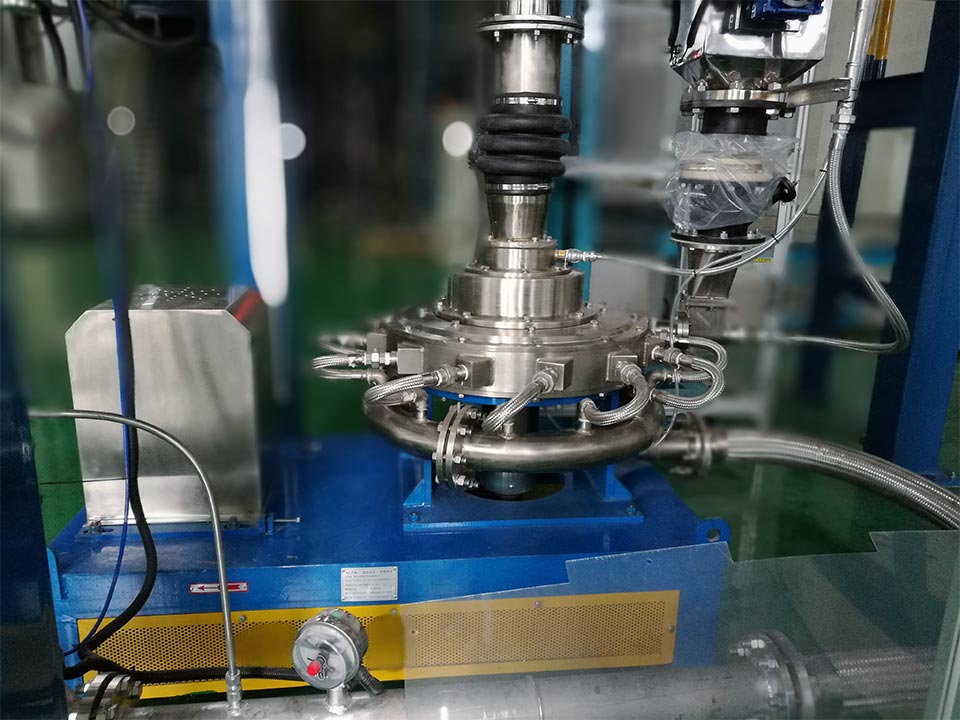
Titanium dioxide is processed by a flat airflow ultrafine grinder to improve dispersibility
After calcination or surface treatment, all titanium dioxide powders are aggregates or sintered products of different sizes. They must be grinded to the original basic raw material size (approximately 0.15~0.35μm) in order to fully reflect its optical properties and pigment performance. Titanium dioxide is a superior white pigment. It has very high requirements on particle size, particle size distribution and purity. It is difficult for general mechanical grinding equipment to meet the requirements. Therefore, airflow ultrafine pulverizers are used as the final pulverization of titanium dioxide at home and abroad. equipment.
As an important equipment for ultrafine pulverization, the airflow superfine pulverizer plays an irreplaceable important role in the production of titanium dioxide. At present, titanium dioxide manufacturers mostly use flat airflow ultrafine pulverizers, and their working principles and application characteristics are as follows.
The working principle of the flat airflow ultrafine pulverizer: the material to be pulverized is injected into the pulverizing chamber through the nozzle, and the high-pressure airflow enters the air distribution chamber through the inlet. The distribution chamber is connected with the pulverizing chamber. At a speed of several hundred meters to thousands of meters per second, because the grinding nozzle and the grinding chamber form an acute angle (grinding angle), the grinded material rotates under the drive of the high-speed swirling flow. Between the particles, the particles and the body produce mutual impact, collision and friction and grind. The fine powder is guided by the centripetal airflow into the center outlet pipe of the grinder and enters the collector for collection, and the materials that do not meet the requirements are returned to the grinding chamber to continue grinding until it reaches the required fineness and is collected.
The flat airflow ultra-fine pulverizer used for the pulverization of titanium dioxide has the following advantages:
1. Due to the self-grading function, the product particle size distribution can be controlled in a very narrow range by adjusting the parameters;
2. No mechanical rotating parts, less pollution to the product;
3. Superheated steam can be used as the pulverizing working medium, with low viscosity and no static electricity, which can reduce the secondary cohesion of the powdered material;
4. Grindingunder high temperature conditions can improve the application dispersibility of titanium dioxide and increase the fluidity of titanium dioxide;
5. The flat airflow ultrafine pulverizer can add organic additives while pulverizing to modify the surface, which can increase the dispersibility of titanium dioxide in different application systems.
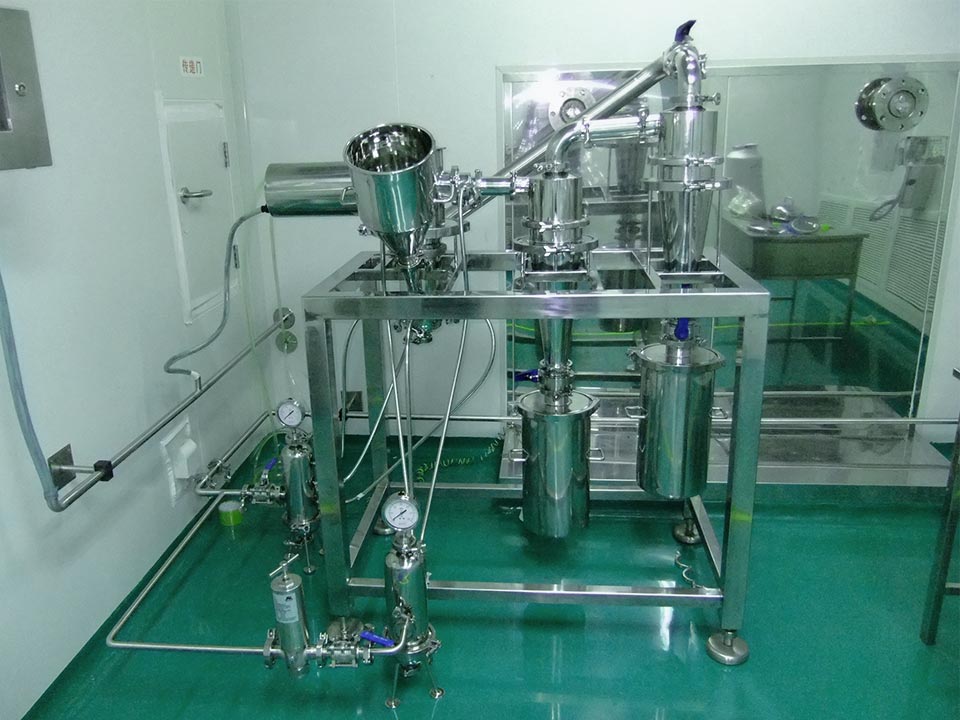
Laboratory ultra-fine jet mill is more suitable for processing high value-added materials
The laboratory ultra-fine jet mill has the characteristics of small size, convenient operation, high crushing precision and stable performance. Although the laboratory ultrafine jet mill can be used for dry pulverization of a variety of materials, it is more suitable for high value-added materials in view of its relatively high cost and required energy consumption.
So, what materials are the laboratory ultrafine jet mills suitable for? Let us first talk about the advantages of the laboratory ultrafine jet mill.
1. The jet mill is where the materials collide with each other for crushing, and the products are free of iron pollution and can completely reach the food safety level.
2. It does not need to be washed with water or water, and it is produced completely by dry method, and the fine powder with better particle size distribution can be obtained after one-time production.
3. The stable and complete classification flow field and special sealing measures reliably prevent the leakage of coarse particles, with a narrow particle size distribution and no large particles.
4. The jet pulverizing classifier has a variable combined structure: one machine has two functions, which can be smashed and classified separately.
5. Wear-resistant treatments are used for the parts that are easy to wear, which greatly reduces the wear of the equipment and prolongs the service life. Automatic control, low noise, no dust pollution.
The laboratory ultrafine jet mill is more suitable for the following materials:
1. Battery materials: lithium cobalt oxide, cobalt oxide, lithium manganese oxide, manganese dioxide, lithium nickel cobalt oxide, lithium nickel manganese oxide, lithium carbonate, lithium iron phosphate, ternary materials, natural graphite, artificial graphite, pitch rock, Lithium hydroxide, cobalt tetroxide, ferrous oxalate, iron phosphate, carbon powder, etc.
2. High hardness materials: silicon carbide, various corundum, boron carbide, alumina, zirconia, garnet, zircon sand, diamond, etc.
3. Non-metallic minerals: quartz, graphite, kaolin, calcium carbide, mica, barite, mullite, medical stone, wollastonite, talc, pyrophyllite, etc.
4. Chemical industry: aluminum hydroxide, catalysts, various dyes, epoxy resins, various additives, etc.
5. Other materials: ceramic materials, refractory materials, electronic materials, magnetic materials, rare earth materials, phosphors, copy material powder, etc.
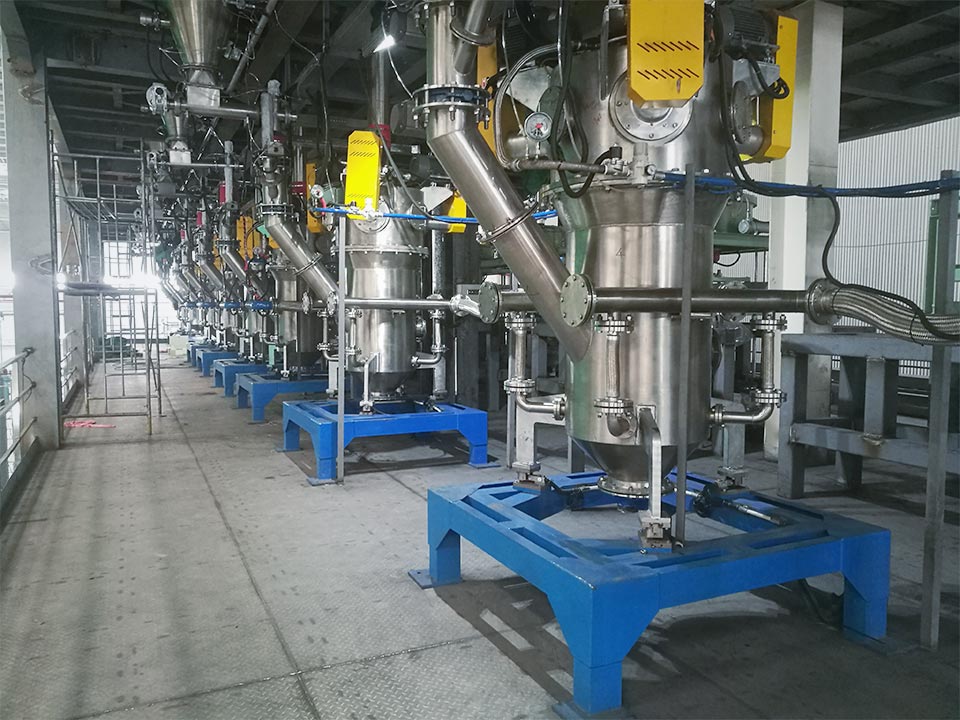
Jet mill is an indispensable equipment in the preparation of lithium cobalt oxide
In lithium-ion batteries, the cathode material is the most important component, and it is also the key to determining the performance of lithium-ion batteries. Lithium cobaltate, lithium vanadium phosphate and lithium iron phosphate have been widely used as cathode materials. Among them, lithium cobalt oxide has an average output voltage of 3.7V, an energy density of up to 140mAh/g, and has the advantages of good cycle performance and thermal stability. These advantages make lithium cobalt oxide considered the most potential high-voltage battery cathode material. The preparation and processing of lithium cobalt oxide powder is also related to the quality of subsequent products, so in the preparation of lithium cobalt oxide, the selection of ultra-fine grinding and classification equipment is particularly important.
Ultra-fine grinding and classification is an indispensable item for lithium cobalt oxide processing, and it is also the back-end equipment of all processing procedures, which has an important effect on the quality of the finished lithium cobalt oxide powder. For the ultra-fine pulverization and classification of lithium cobalt oxide, a jet mill is usually used to make the processed finished product have the characteristics of fine particle size, uniform particle size distribution, good dispersibility, and pollution-free.
Equipment characteristics of lithium cobalt oxide jet mill:
- It has the ability of shaping, and can control the particle morphology and particle size. The finished product has excellent particle morphology and can be used for shaping of different material characteristics and requirements.
- The particle size distribution is narrow, and the finished product has a high tap density.
- Over-grinding is low, and the finished product rate can reach over 96%.
- The equipment is lined with wear-resistant materials, the equipment wears little, and the finished product has high purity.
- Using frequency converter for precise control, the material fineness can be adjusted arbitrarily between 0.5-100 μm.
- Full negative pressure operation, low noise, no dust pollution.
Lithium cobalt oxide jet mill is also suitable for lithium battery cathode materials: iron phosphate, lithium iron phosphate, ternary materials, lithium manganate, lithium nickel manganate, lithium carbonate, lithium hydroxide, ferrous oxalate and other dry powder materials Crushing, breaking and particle shaping.